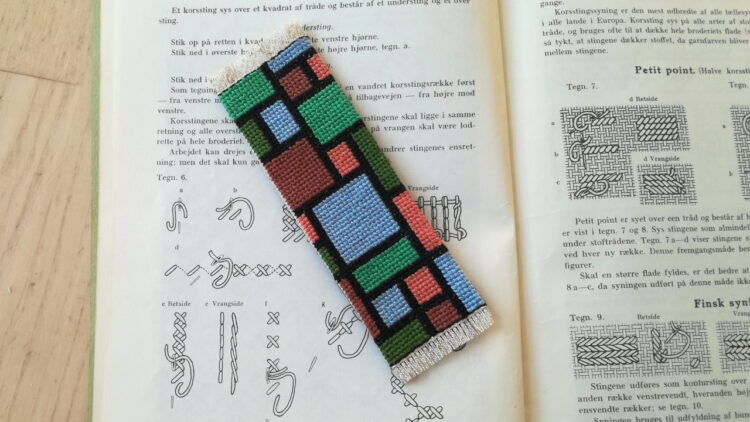
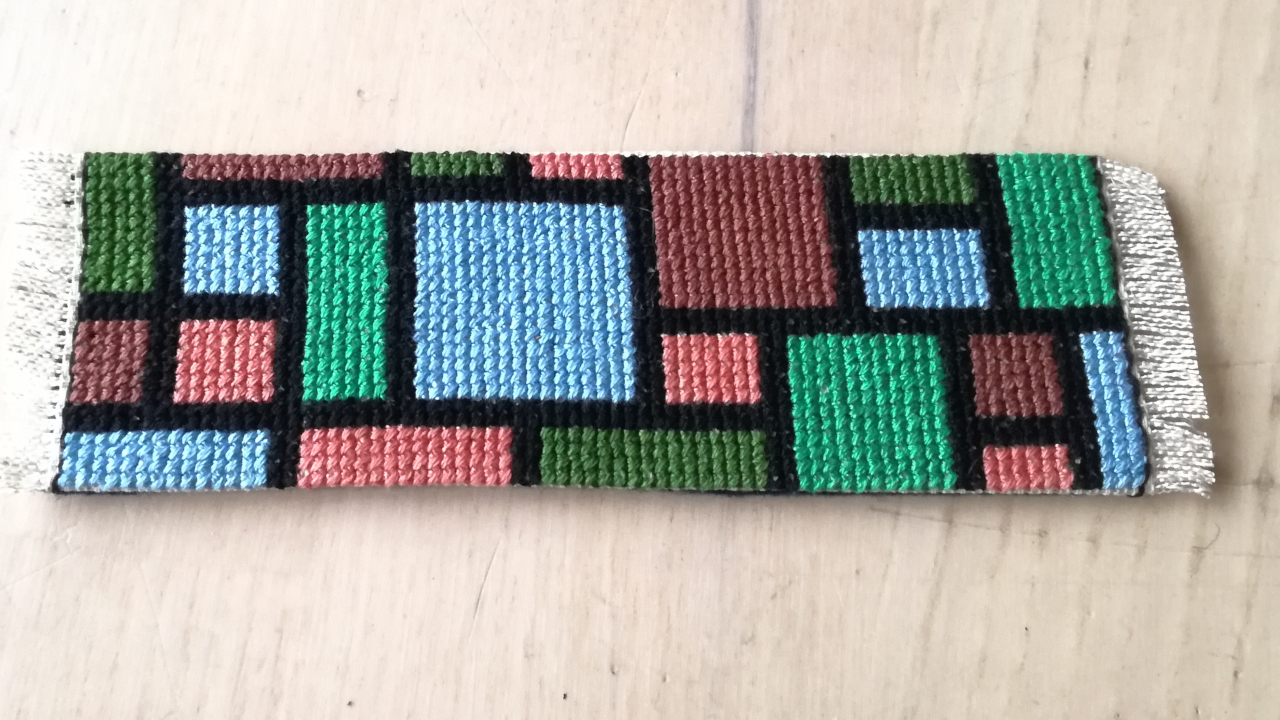
It is easy to turn a cross stitch or embroidery to a simple, personal bookmark with a felt backing. Just find a pattern that you like, with a size suitable for books, stitch away and add a little glue, straight stitches and a backing of felt to make your own bookmark.
1. Prepare your embroidery
Stitch your and leave some extra fabric on all sides for folding over. After finishing the stitching, wash and dry the embroidery to get it nice and clean. It’s also a good idea to iron it facing down to give the thread extra volume.
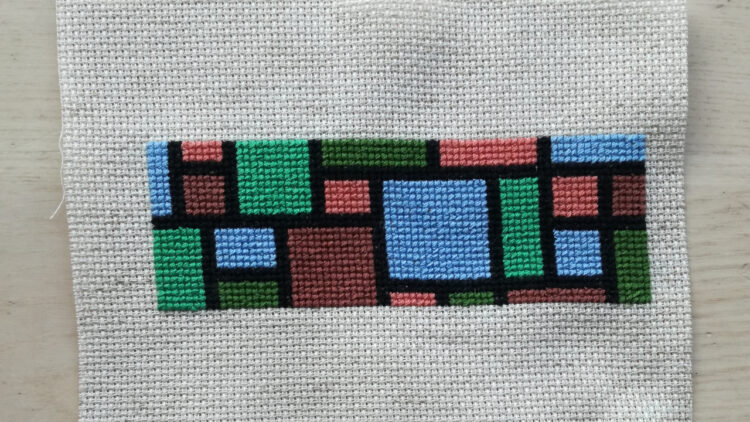
2. Fold sides of bookmark and cut felt for backing
Fold the long sides of the bookmark backwards and be careful to get it folded right to the edge of the pattern in order to get the best result. Iron it carefully to get the bookmark nice and flat.
Cut a piece of felt or a different kind of cloth you like. Measure and cut the lenght and width to match the stitched front.
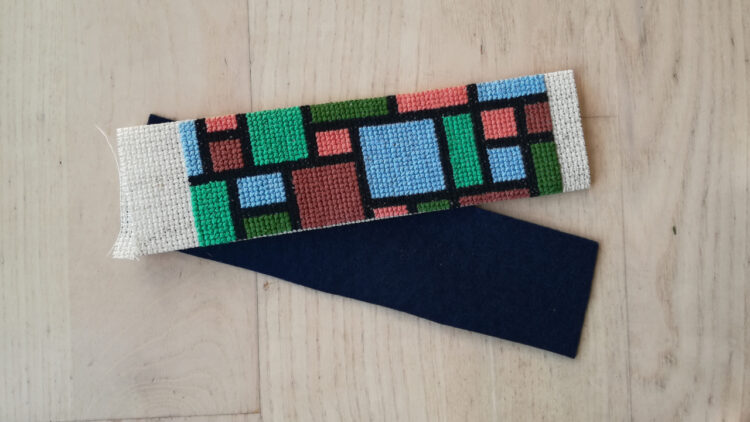
After cutting the felt you can trim the embroidery front down and make the excess fabric as little as possible. This gives a neater bookmark that is not too thick.
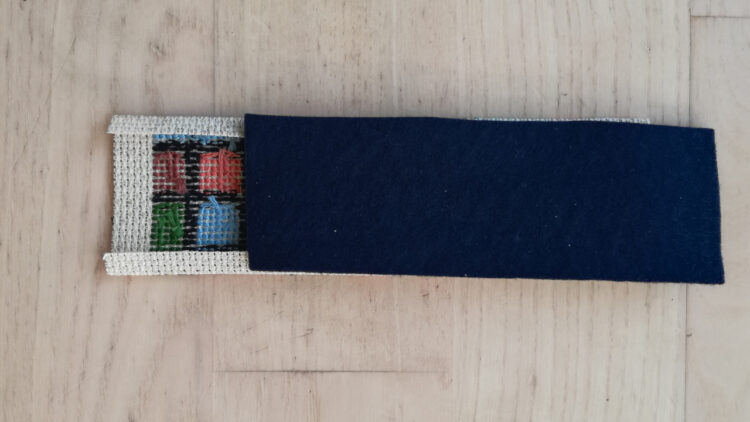
3. Glue the front and back together
Before you starrt glueing the pieces together, now is the time to check and double check if the sizes of front and back material match eachother.
Choose a glue suitable for fabric and glue as little as nescessary – if the embroidery gets soaked in glue, there is a risk the glue will bleed through and show on the embroidery. This will make the embroidery stiff and rough to touch at the glued area.
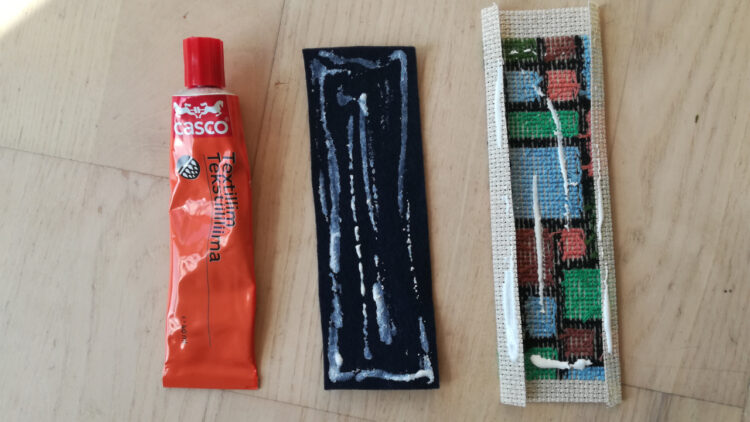
4. Finish the bookmark with fringes
It’s time to make the finishing touches on the glued and dried bookmark. The glue and felt are keeping the sides of the bookmark in place, but the ends are still at risk of fraying and unravelling the aida and stitched area. In order to avoid this, the aida is front stitched at the very edge and the extra aida is fringed. Simply choose a colour for the thread, make a running stitch from left to right every other hole, turn at the end and stitch back right to left making a a solid line appear.
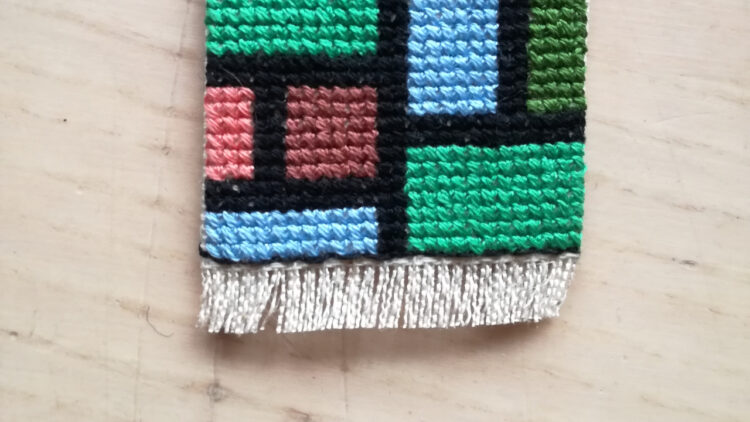
The fringes are made by gently removing the vertical strands of cloth in the aida.